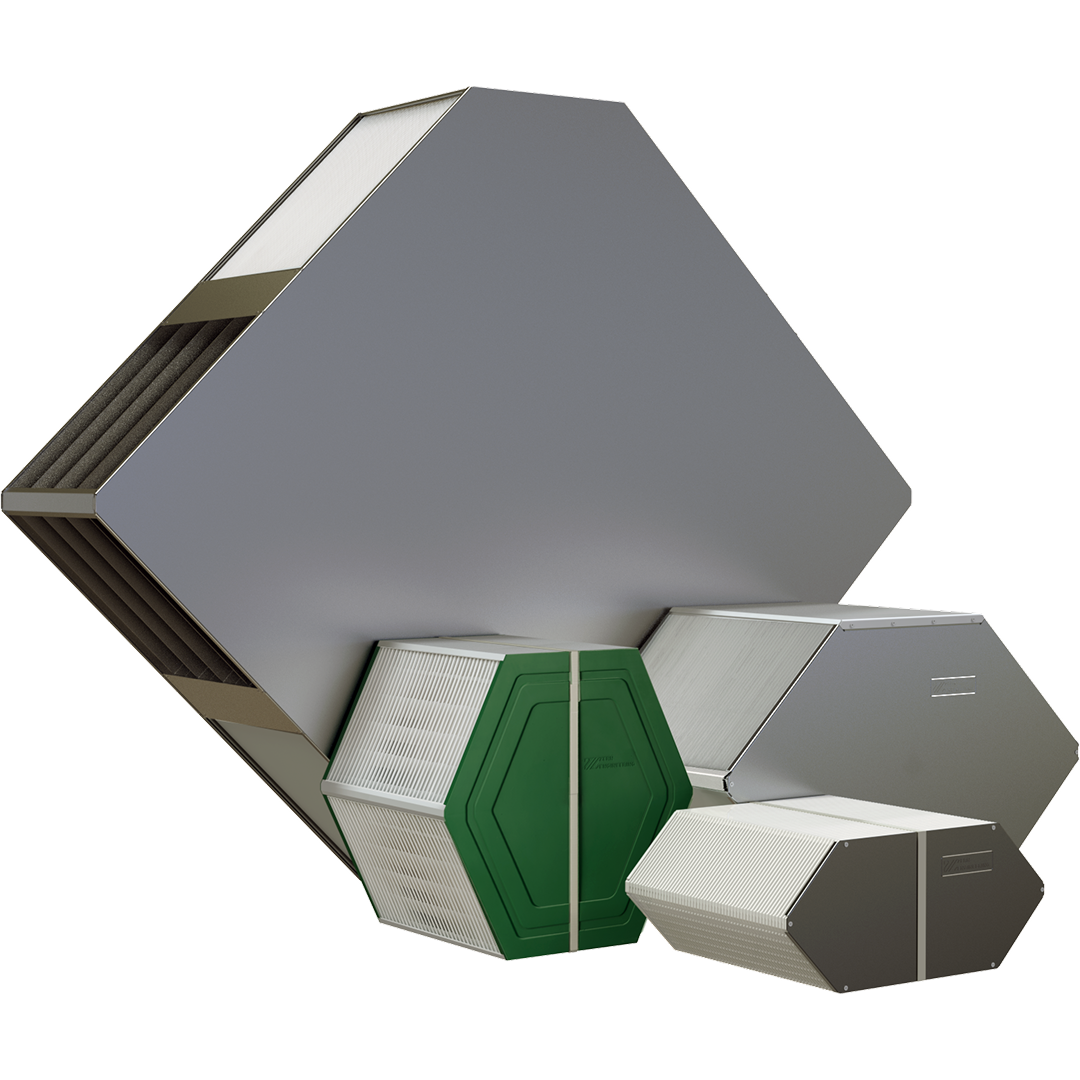
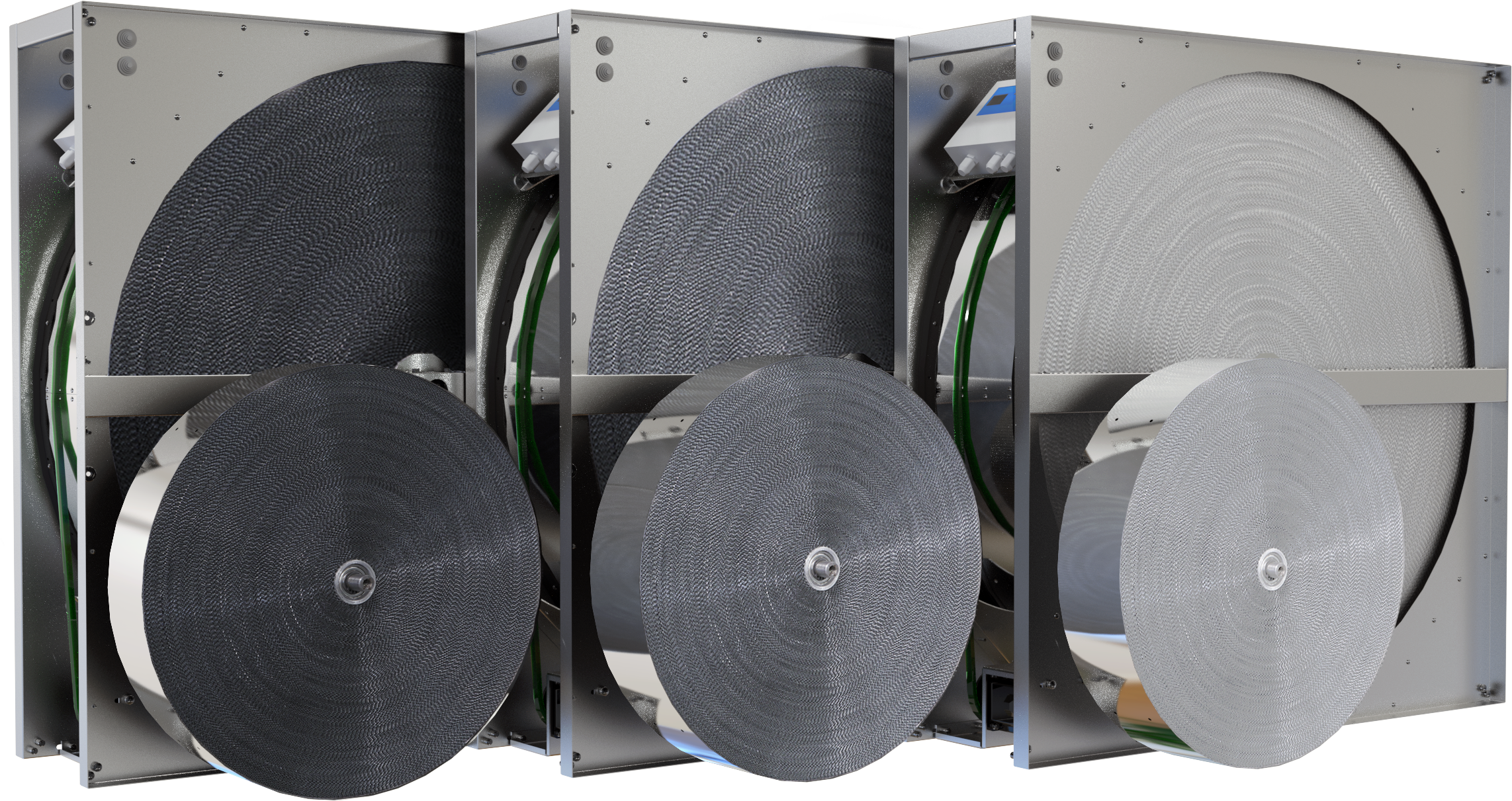
Rotary heat exchangers
85%
Efficiency
85%
Efficiency
Product categories
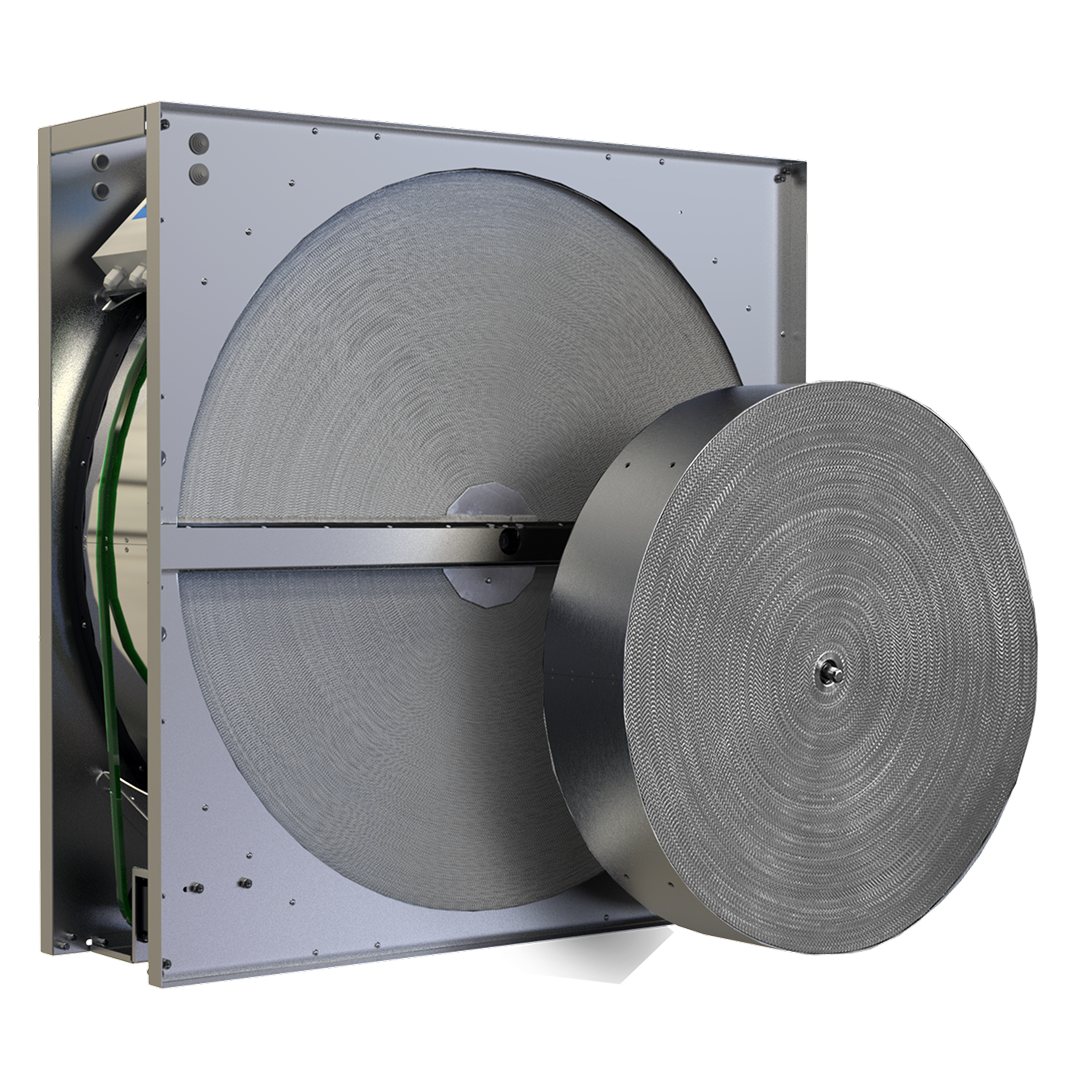
Condensing rotary heat exchangers
Series:
R-EX
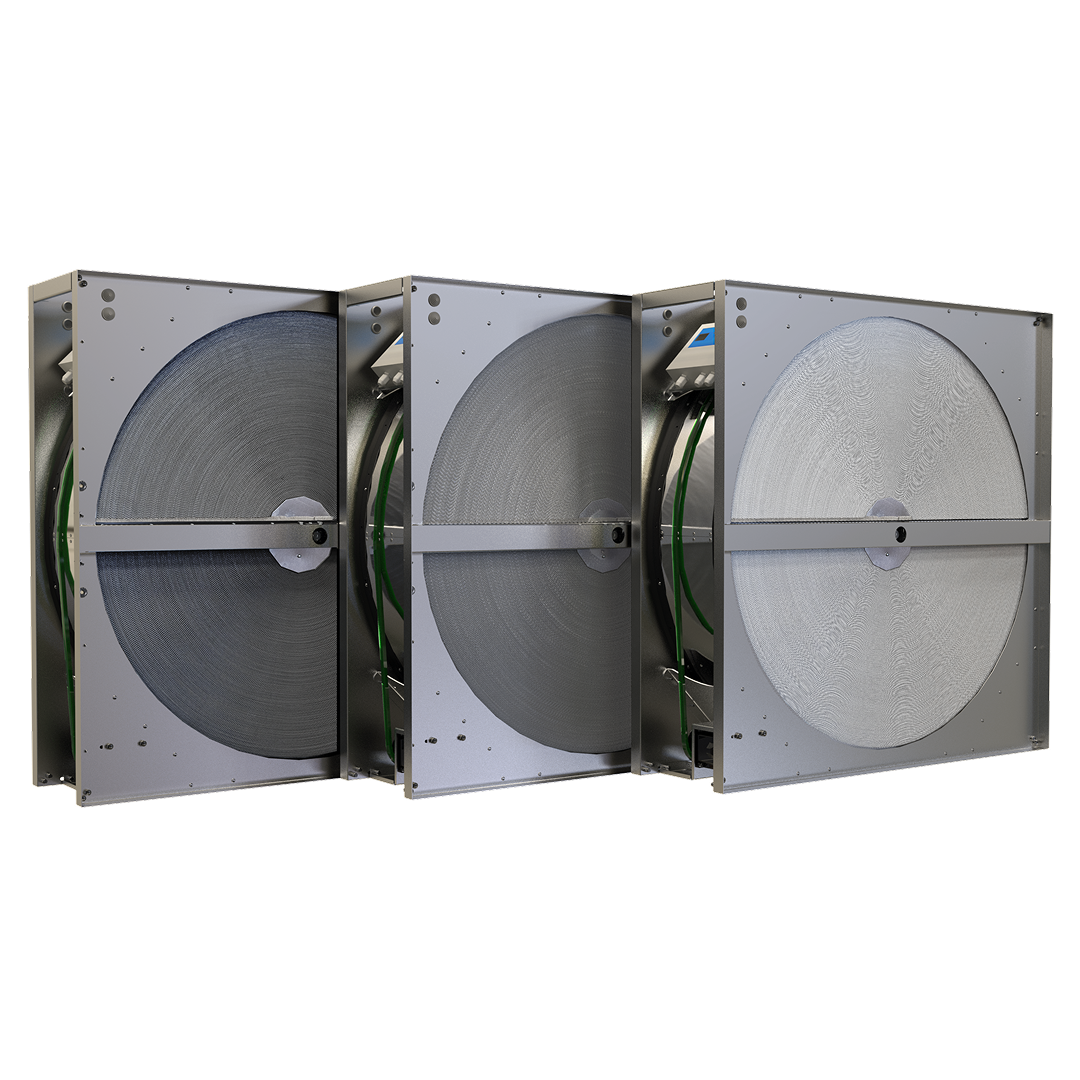
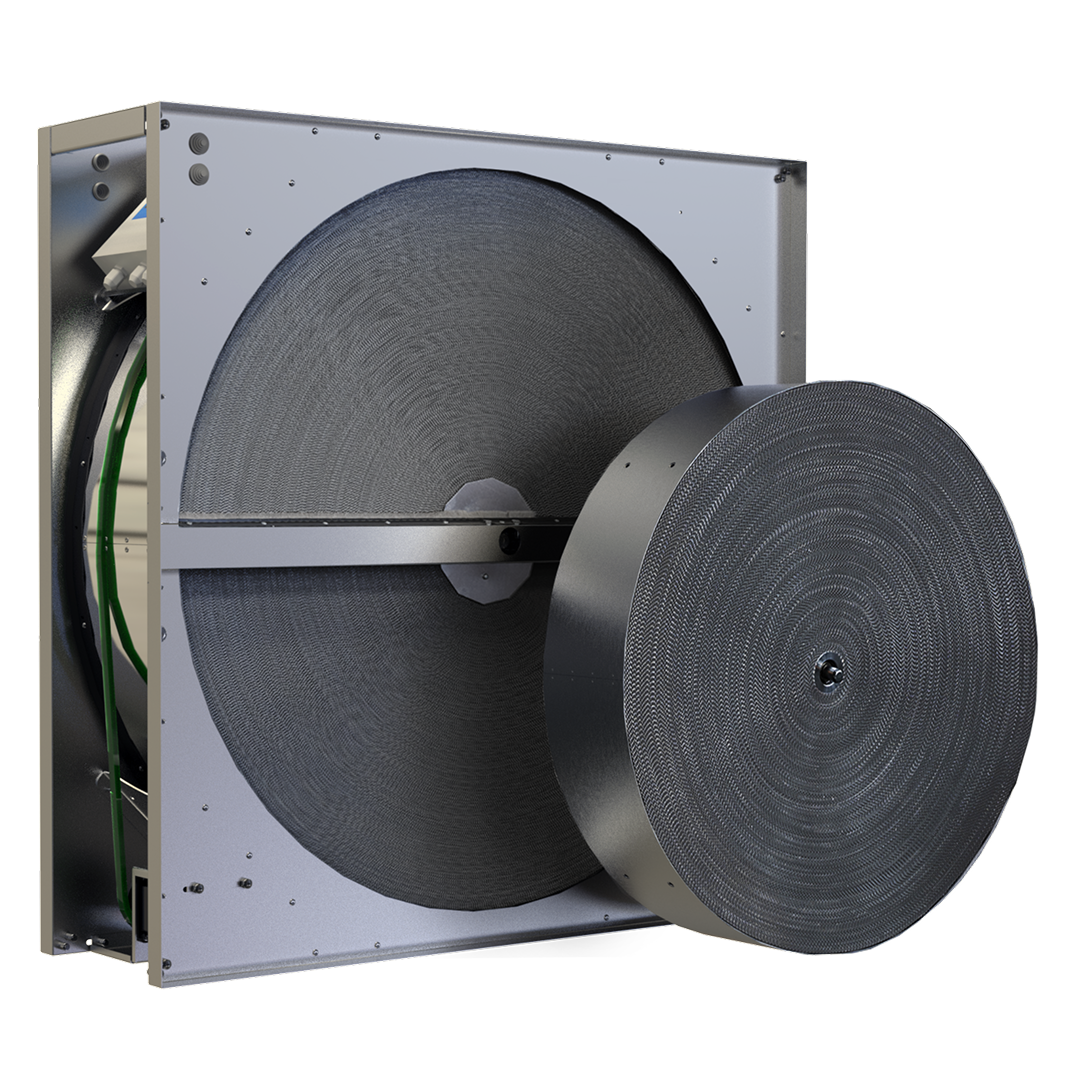
Sensible-only heat recovery for dry ventilation where humidity transfer is not required. It is efficient and easy to integrate.
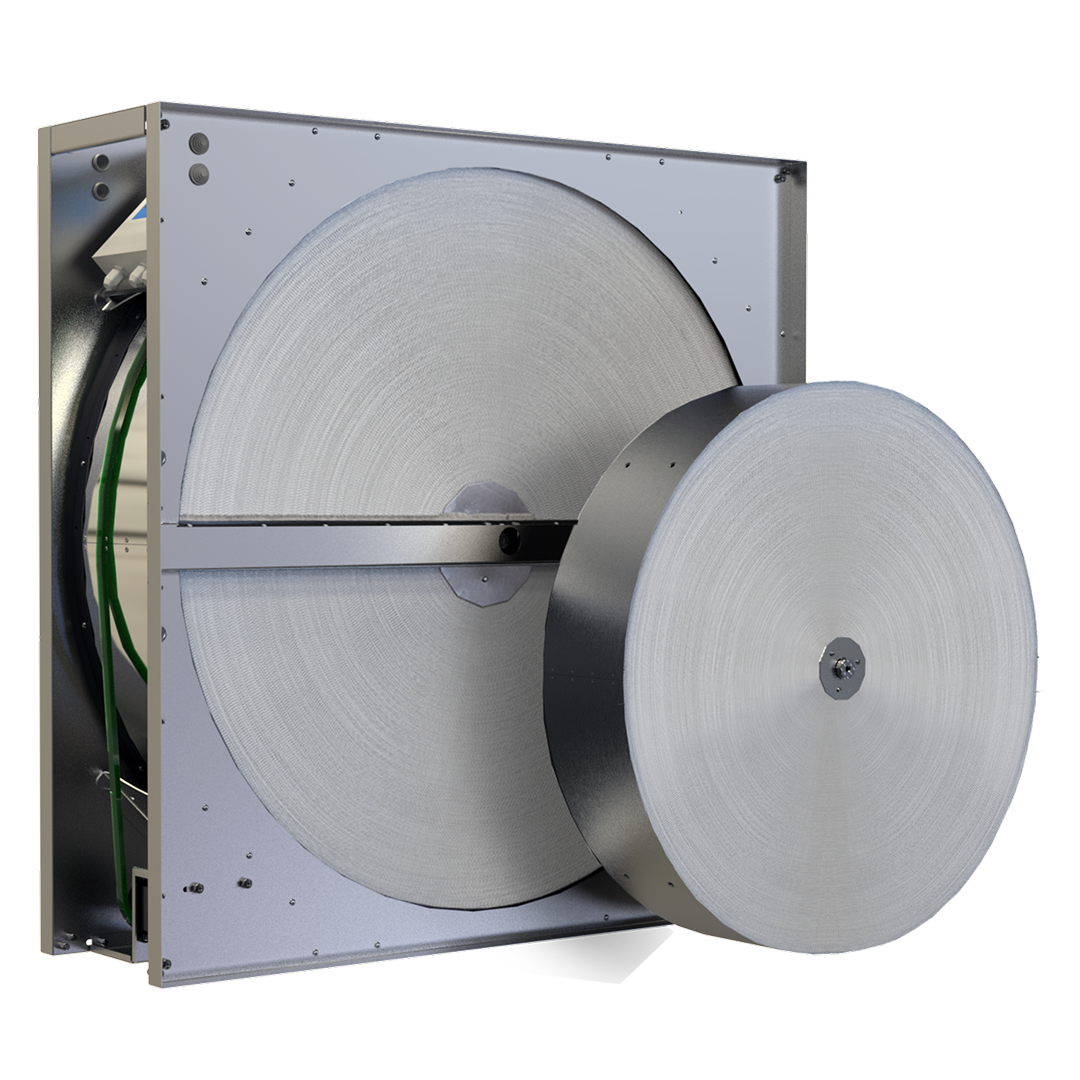
Enthalpy rotary heat exchangers
Series:
R-E-EX
Hygroscopic coating transfers heat and moisture to help keep indoor RH comfortable in homes, offices, and public spaces.
Sorption rotary heat exchangers
Series:
R-N-EX
Advanced sorptive layer for high moisture recovery and stable indoor climate — well suited for swimming pools, fitness centers, and demanding commercial spaces.
Key operating parameters

Airflow volume
Designed to handle air volumes from 100 m³/h to 50,000+ m³/h, making them suitable for any system, from compact residential to large industrial and commercial installations.

Operating temperature
−25 °C to +50 °C.

Relative humidity range
Rotary heat exchangers are designed for reliable operation at a relative humidity of 10–95%.

Pressure difference
Typical systems operate at 300–500 Pa between flows, recommended up to 1000 Pa.

Frost resistance
Thanks to continuous movement and internal energy transfer, rotary heat exchangers are frost-resistant. This ensures stable operation even at low outside temperatures without the need for electric or bypass defrosting.

Installation orientation
ZERN ENGINEERING rotary heat exchangers are mainly installed in a vertical orientation, but horizontal installation is also available if required.
Technical features
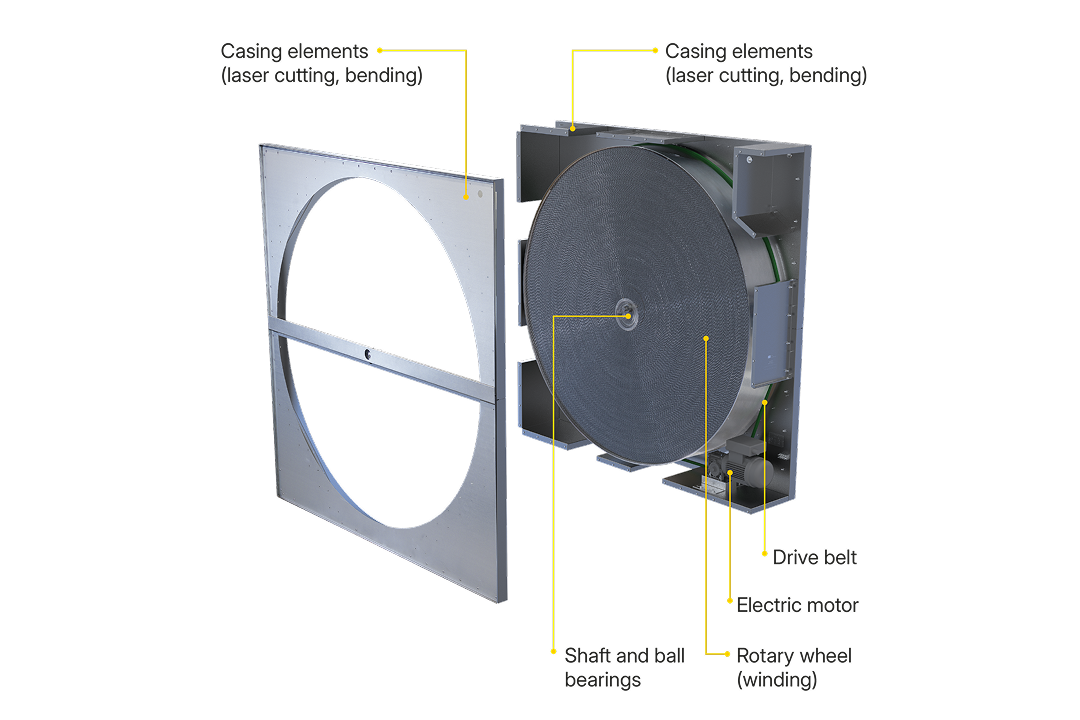
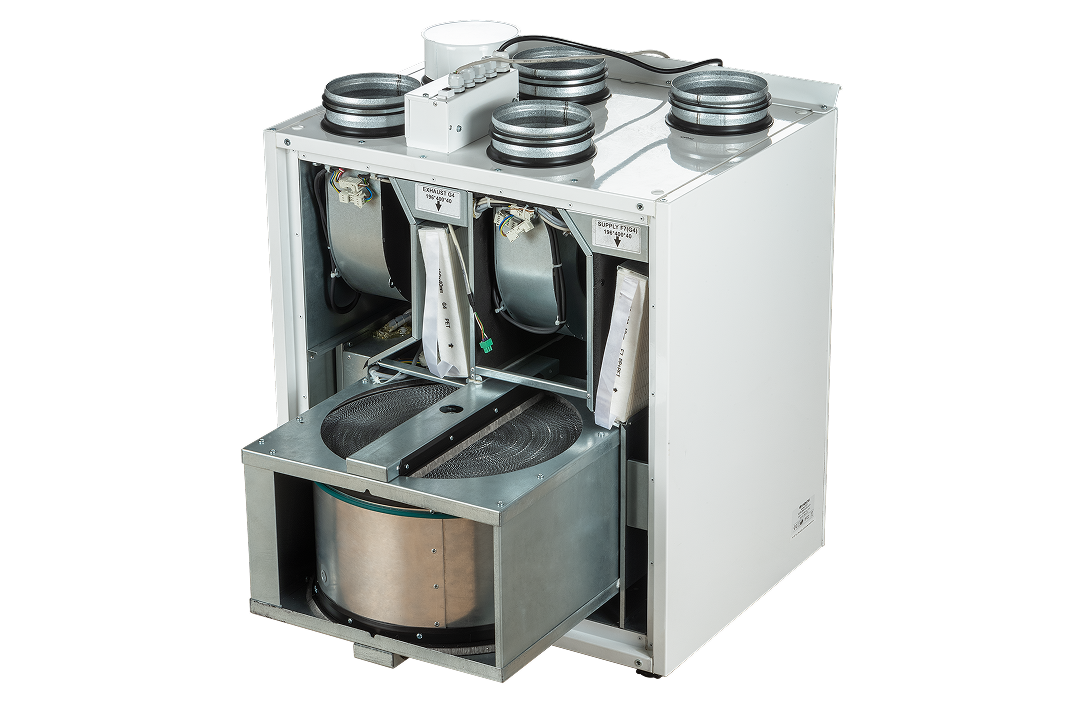
A rotary heat exchanger consists of a rotating wheel made up of numerous small air ducts or channels, typically constructed from aluminum. This wheel rotates between two separate air streams: the warm exhaust air and the cooler incoming fresh air. As the wheel turns, it absorbs heat from the outgoing air and transfers it to the incoming air, effectively recovering energy that would otherwise be lost. In units equipped with hygroscopic coatings, moisture can also be transferred, facilitating humidity control.

Modifications
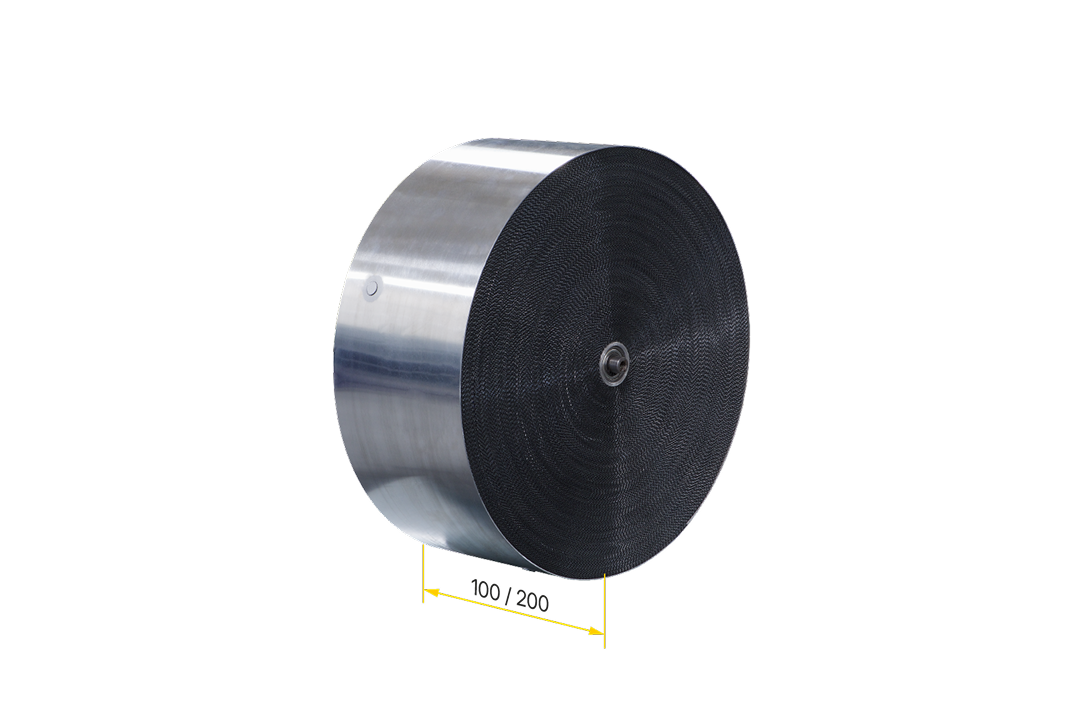
Rotor (matrix)
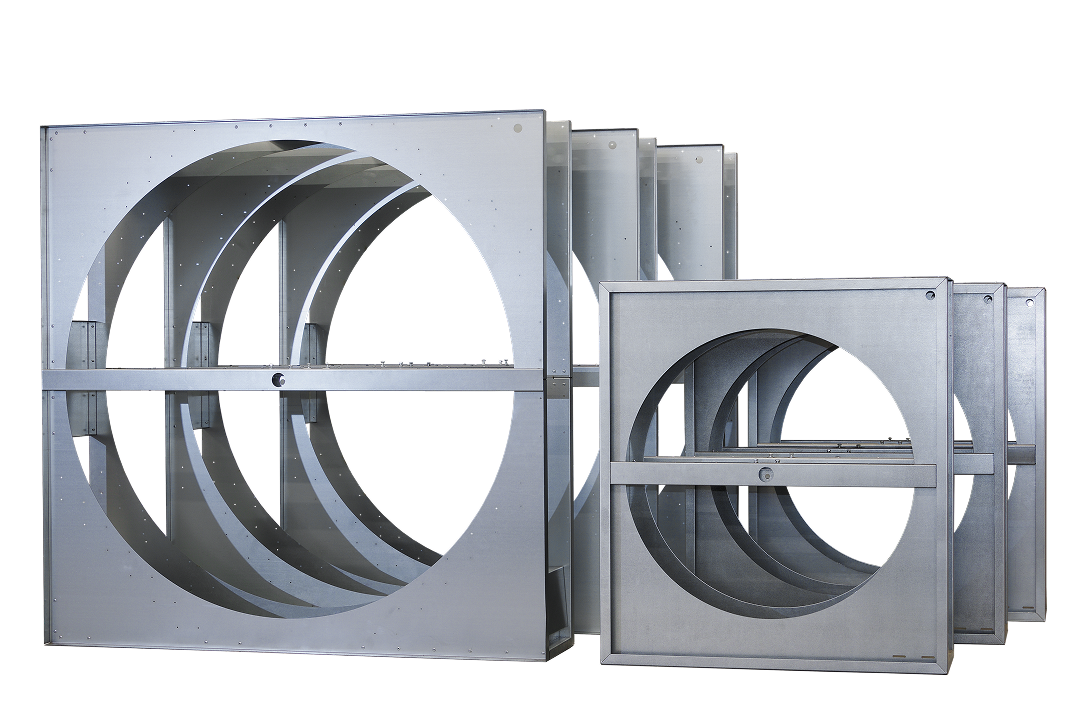
Casing
Drive
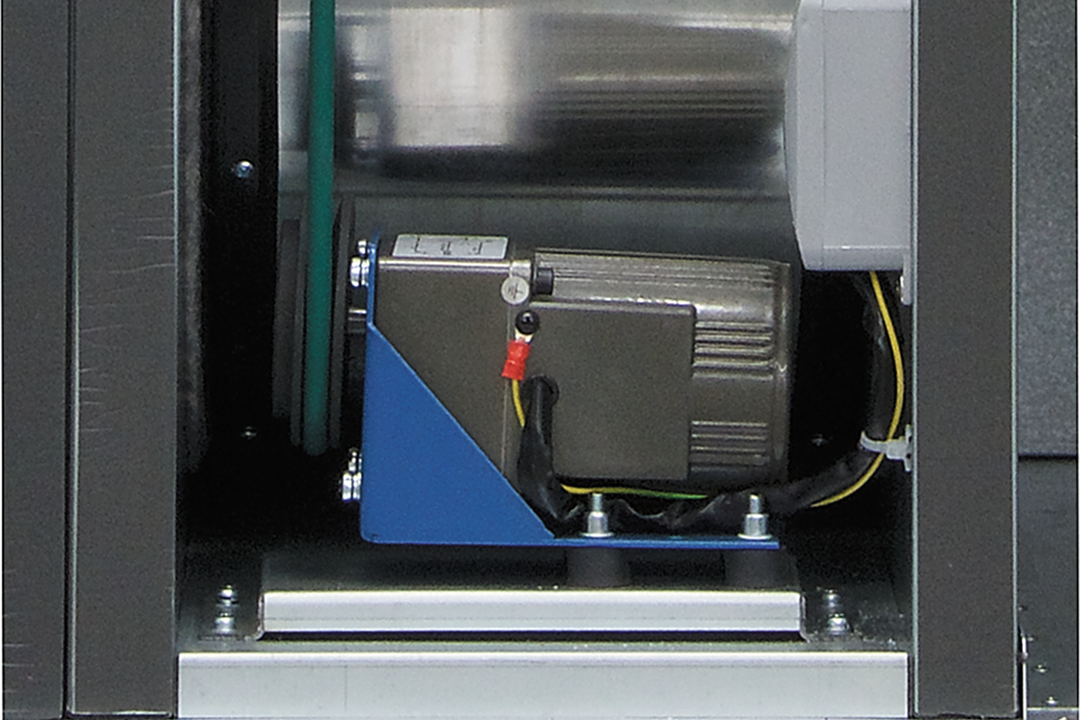
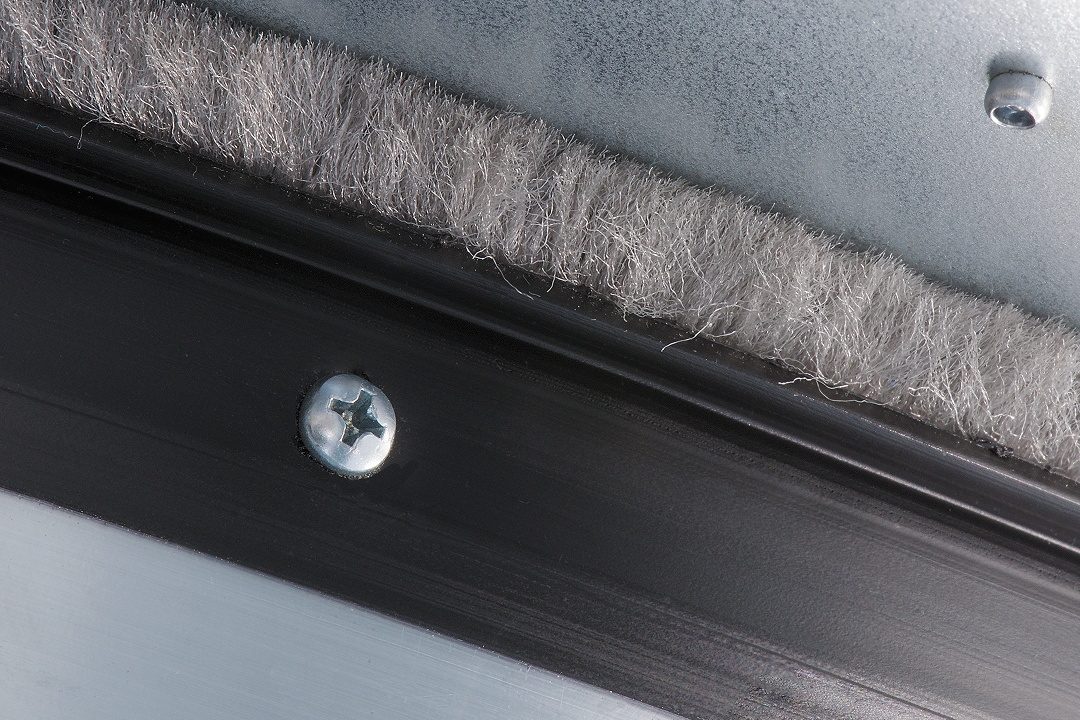
Sealing system
High-quality seals minimize leakage and cross-contamination.