Articles / 12.09.2023
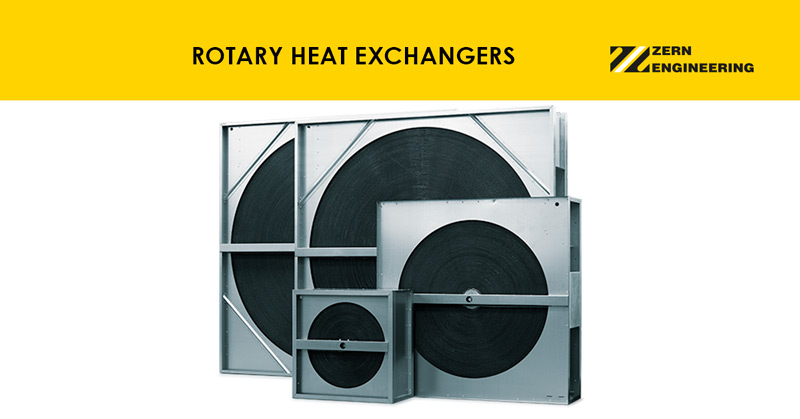
Hello, ZERN ENGINEERING community!
Today we would like to tell you about another area of our production - rotary heat exchangers.
Rotary heat exchangers are a proven heat recovery technology that has been used in many industries and climates and is still being used successfully in various HVAC systems.
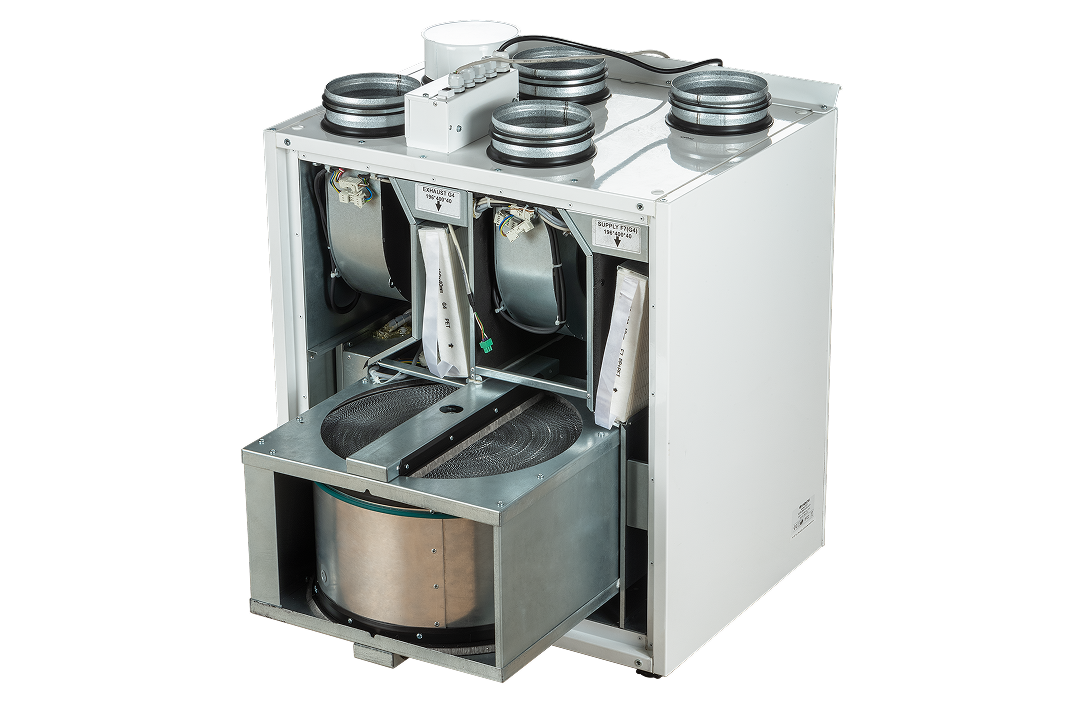
The main operating element of a rotary heat exchanger is its rotor wheel, a heat-intensive matrix. Rotating alternately between the supply and exhaust sections, the wheel is heated by the warmer flow and transfers heat to the cooler flow, thereby heating it.
Benefits:
Energy efficiency: Rotary heat exchangers can dramatically reduce your energy consumption by recycling heat, making your HVAC systems more sustainable and cost-effective.
Improved indoor air quality: Rotary HE helps maintain a healthy indoor environment by ensuring a constant supply of fresh, filtered air, which is essential for your well-being.
Cost savings: Lower energy bills and reduced maintenance costs are just some of the financial benefits you can enjoy.
Ready to experience these advantages firsthand?
Visit our website zern-engineering.com to explore our range of rotary heat exchangers and find the perfect solution for your needs.
Latest news from ZERN ENGINEERING
Explore more articles and updates

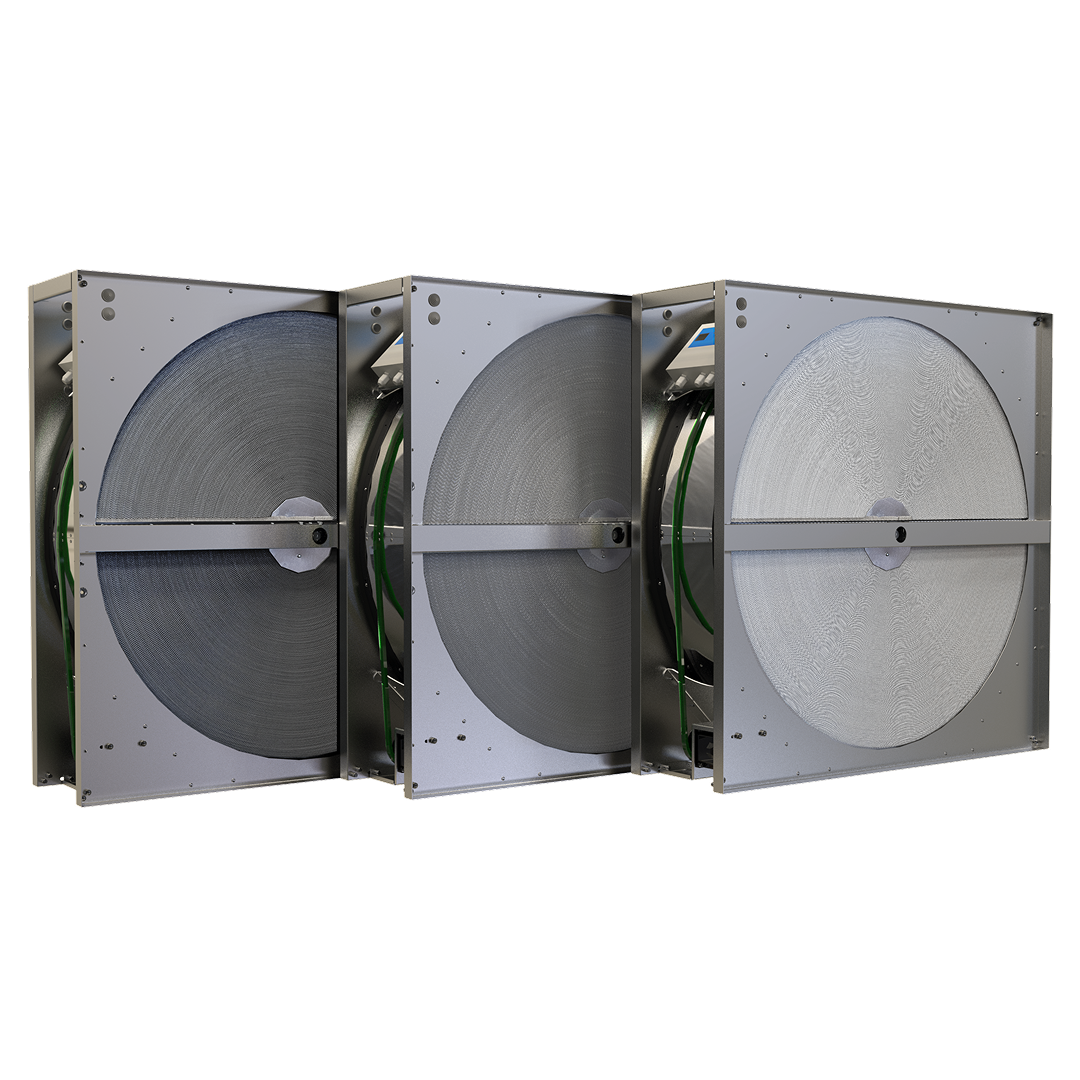
Rotary heat exchangers (thermal/rotary wheels) recover energy between exhaust and supply air streams to lower HVAC power use and stabilize indoor comfort. Depending on the wheel type, they either only transfer sensible heat or both heat and moisture. Compact design, less need for maintenance, and long service life make them a reliable choice for commercial, residential, and industrial ventilation.
Product categories
Types and variations
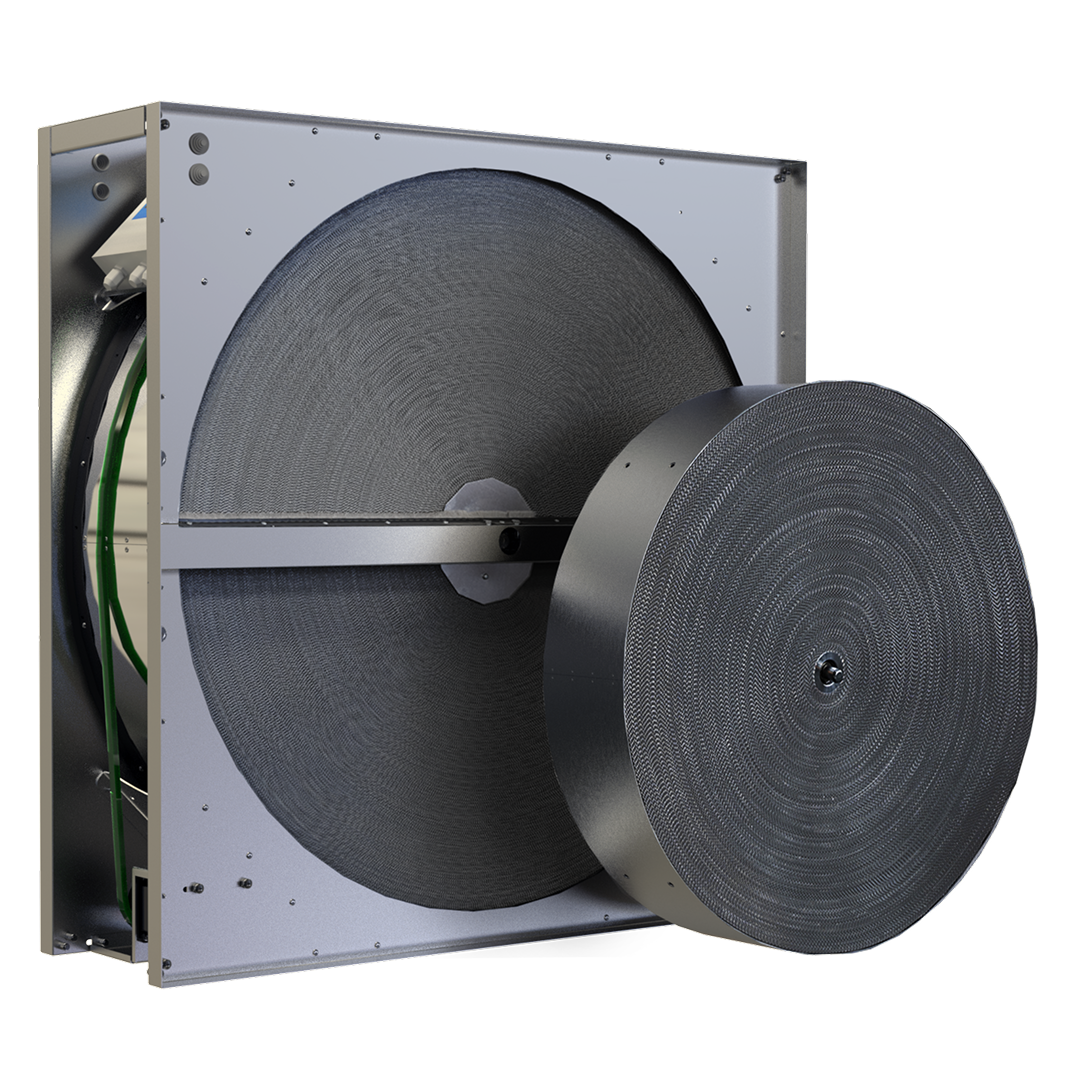
Condensing rotary heat exchangers
Series:
R-EX
Sensible-only heat recovery for dry ventilation where humidity transfer is not required. It is efficient and easy to integrate.
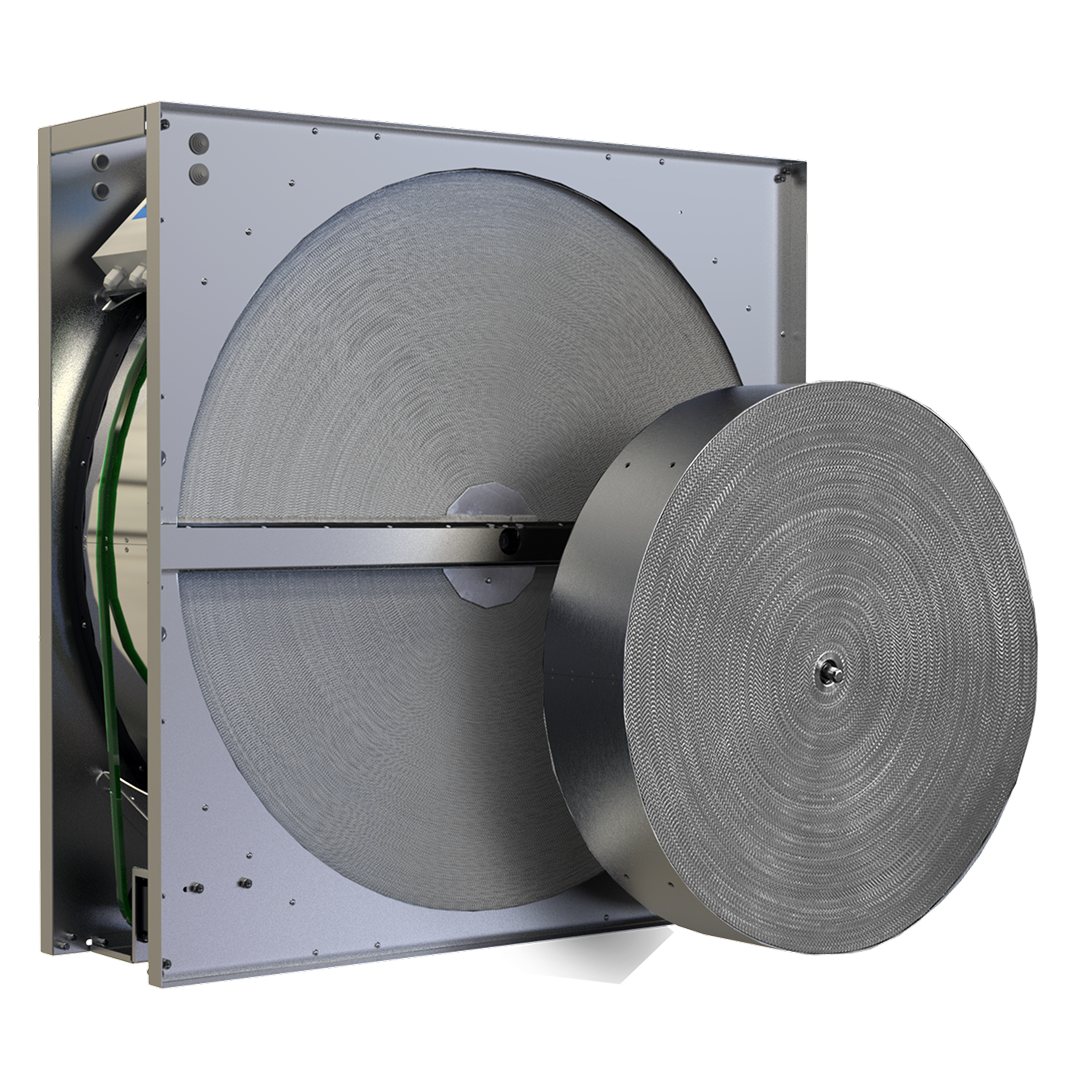
Enthalpy rotary heat exchangers
Series:
R-E-EX
Hygroscopic coating transfers heat and moisture to help keep indoor RH comfortable in homes, offices, and public spaces.
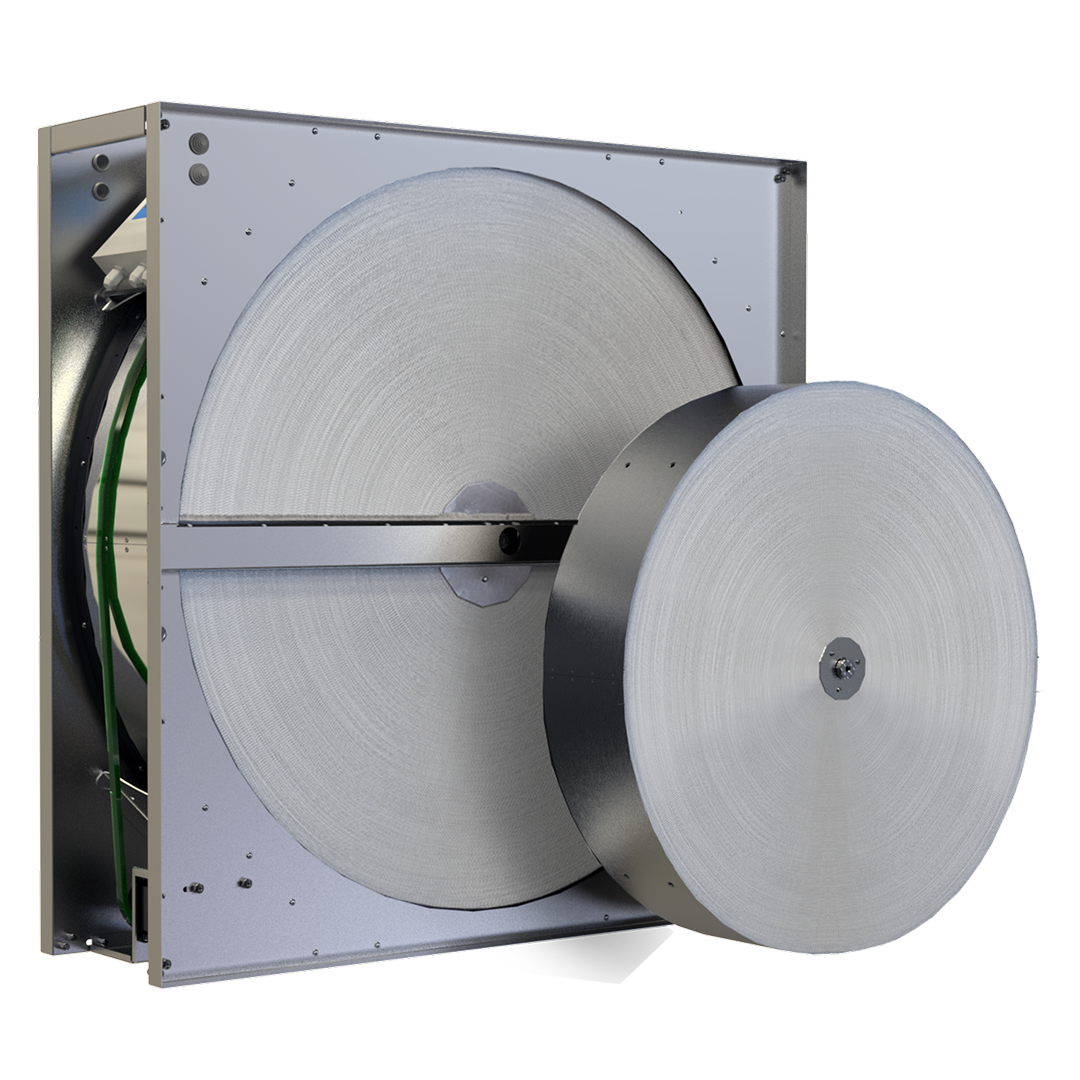
Sorption rotary heat exchangers
Series:
R-N-EX
Advanced sorptive layer for high moisture recovery and stable indoor climate — well suited for swimming pools, fitness centers, and demanding commercial spaces.
Key operating parameters
Performance characteristics

Airflow volume
Designed to handle air volumes from 100 m³/h to 50,000+ m³/h, making them suitable for any system, from compact residential to large industrial and commercial installations.

Operating temperature
−25 °C to +50 °C.

Relative humidity range
Rotary heat exchangers are designed for reliable operation at a relative humidity of 10–95%.

Pressure difference
Typical systems operate at 300–500 Pa between flows, recommended up to 1000 Pa.

Frost resistance
Thanks to continuous movement and internal energy transfer, rotary heat exchangers are frost-resistant. This ensures stable operation even at low outside temperatures without the need for electric or bypass defrosting.

Installation orientation
ZERN ENGINEERING rotary heat exchangers are mainly installed in a vertical orientation, but horizontal installation is also available if required.
Technical features
Design and structure
Principle of operations
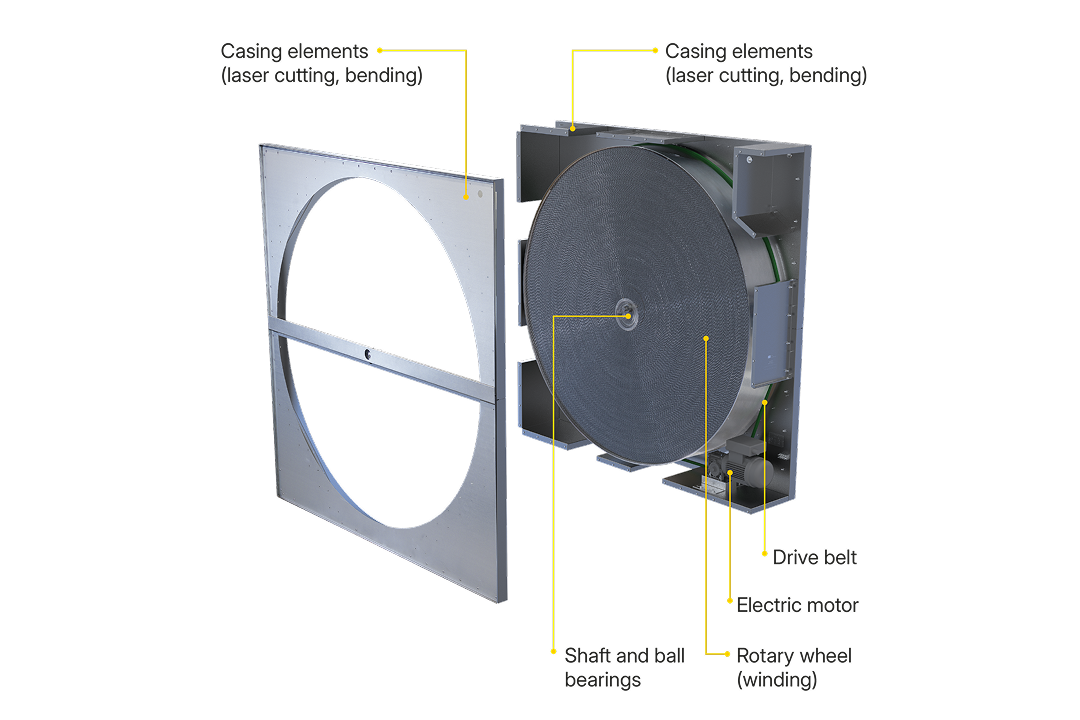
A rotary heat exchanger consists of a rotating wheel made up of numerous small air ducts or channels, typically constructed from aluminum. This wheel rotates between two separate air streams: the warm exhaust air and the cooler incoming fresh air. As the wheel turns, it absorbs heat from the outgoing air and transfers it to the incoming air, effectively recovering energy that would otherwise be lost. In units equipped with hygroscopic coatings, moisture can also be transferred, facilitating humidity control.
Rotor matrix
- Foil thickness: 0.055 or 0.07 mm
- Wave height (corrugation): 1.4 / 1.6 / 1.8 / 2.1 mm (trade-off between pressure drop and efficiency).
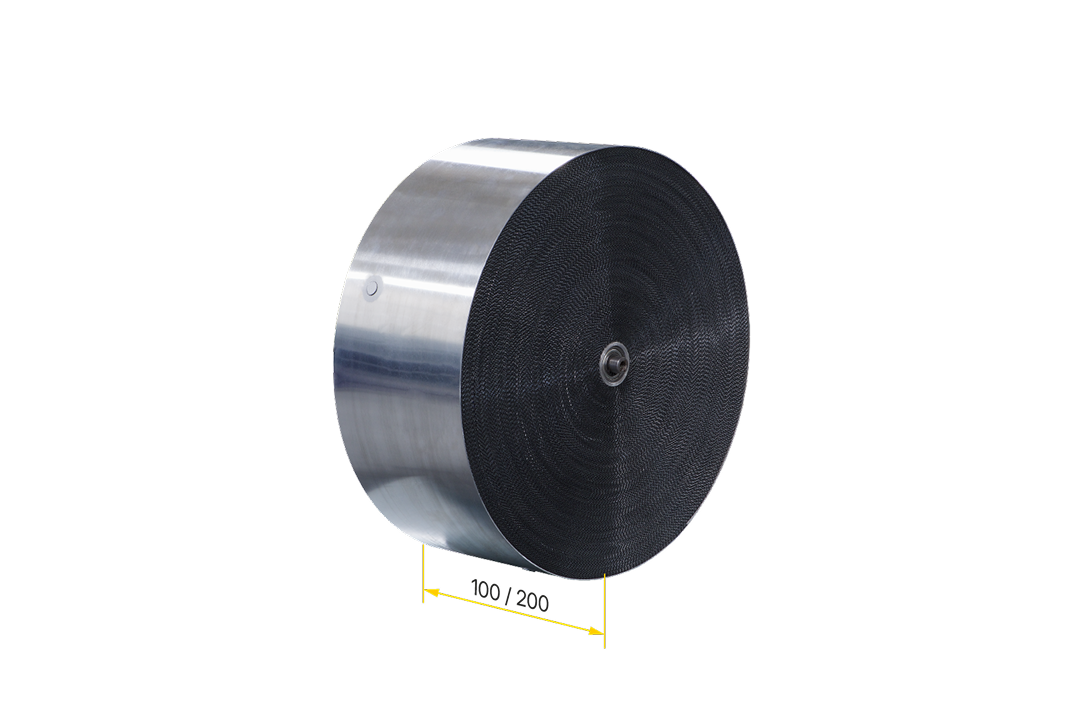
- Rotor width (depth): 100 or 200 mm for compact or high-capacity systems.
- Surface treatments (R-E-EX / R-N-EX): hygroscopic or sorptive coatings (e.g., silica gel / molecular sieve) enable latent-heat and moisture transfer.

Casing materials
- Galvanized steel — cost-effective, durable for standard applications.
- Aluminum — lightweight, corrosion-resistant where weight matters.
- Stainless steel (AISI 304/316) — for harsh, coastal, or chemically aggressive environments.
Modifications
Main components
Rotor (matrix)
Cylindrical stack of flat and corrugated aluminum foil providing large surface area for transfer.
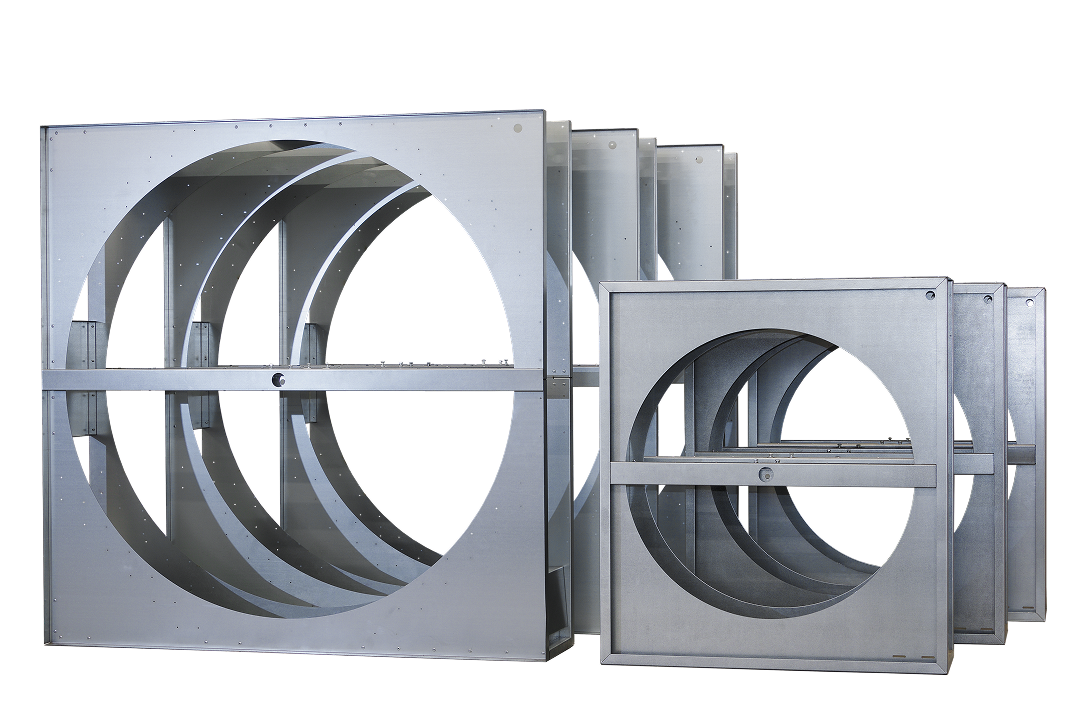
Casing
The main load-bearing metal structure in which all elements of the unit are housed
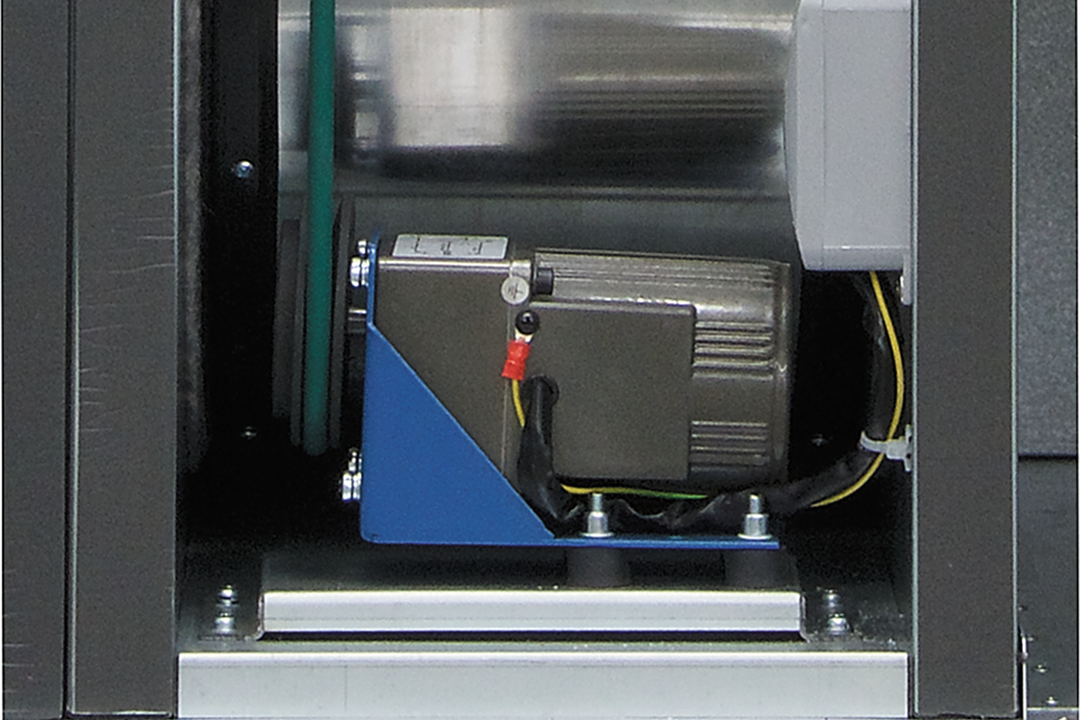
Drive
An electric motor and controller (optional), coupled with a belt drive system, rotates the rotor at a controlled, steady speed, typically between 10 to 20 RPM, adjustable to balance efficiency and control.
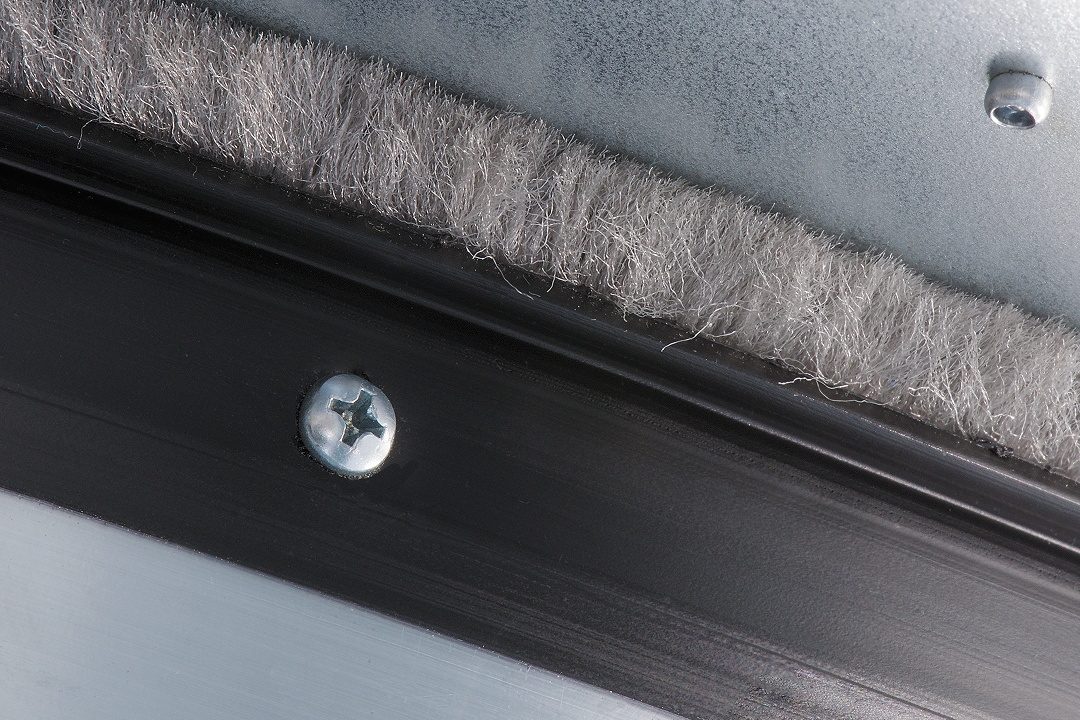
Sealing system
High-quality seals minimize leakage and cross-contamination.
Modifications
Applications
- Residential buildings — apartments, multi-family housing, private homes.
- Commercial facilities — offices, shopping centers, schools, cultural institutions.
- Industrial systems — production halls, warehouses, logistics complexes.
- Hotel and wellness sector — hotels, fitness centers, swimming pools.
- Public spaces — airports, stadiums, exhibition halls, transport hubs.