Articles / 20.05.2026
Rotary heat exchangers (rotary heat recovery wheels) are widely used in modern ventilation systems to improve energy efficiency. They transfer heat between exhaust and supply air streams, reducing heating and cooling demand. In HVAC applications such as offices, retail, and industrial facilities, rotary heat exchangers are valued for their compact design and stable performance.
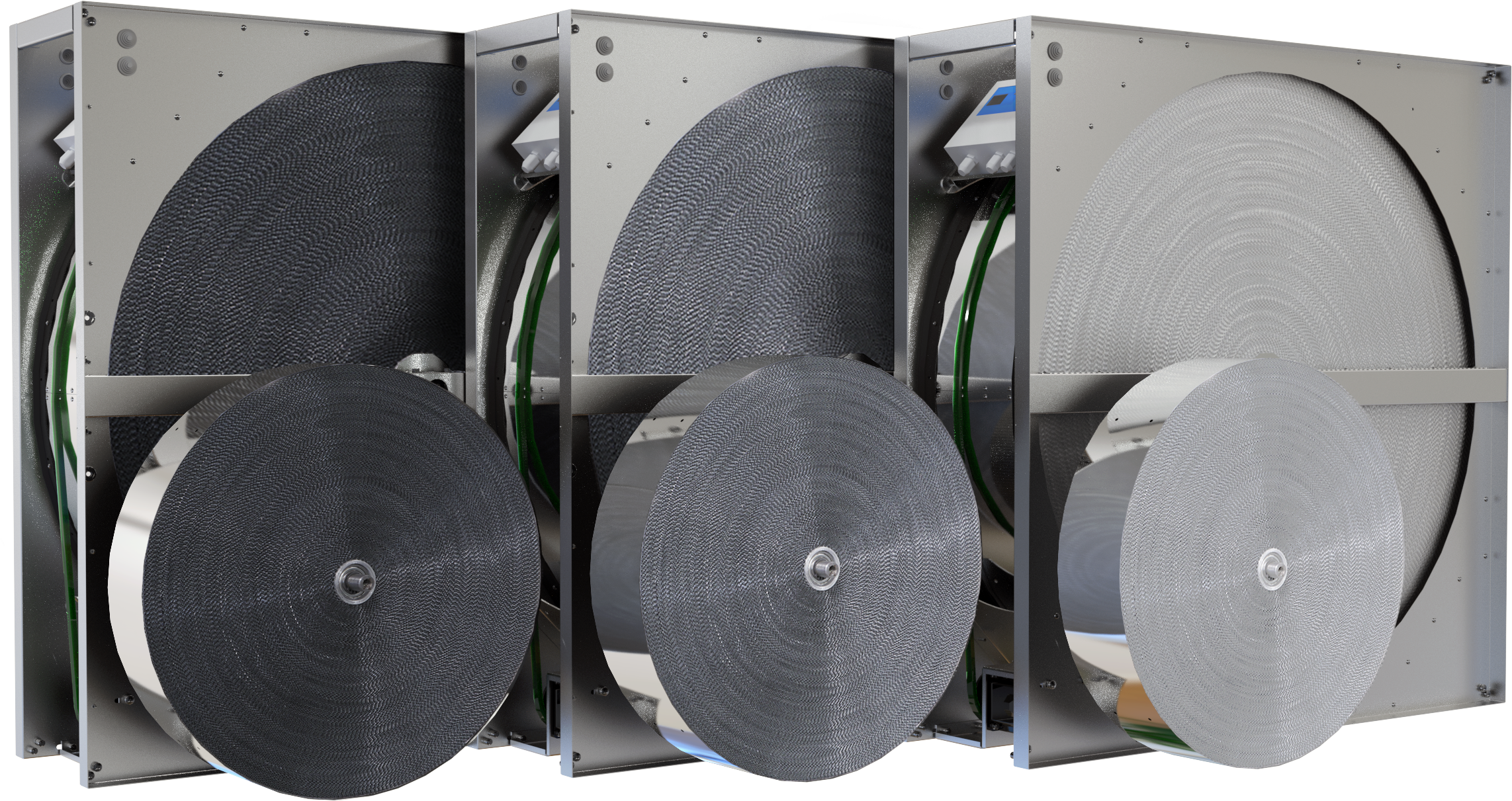
The working principle is straightforward. A slowly rotating wheel made of corrugated metal passes through two air streams. It absorbs heat from the exhaust air and releases it to the incoming fresh air. In enthalpy rotary heat exchangers, moisture transfer is also possible, helping maintain indoor humidity and reducing load on air conditioning systems.
Advantages and limitations
Key advantages of rotary heat exchangers include:
- High heat recovery efficiency (up to 85–90%)
- Compact size compared to plate heat exchangers
- Ability to transfer both sensible and latent heat
- Reduced risk of frosting in cold climates
At the same time, rotary heat exchangers have a known limitation — air carryover. A small portion of exhaust air can transfer to the supply side due to rotation and leakage. In most HVAC applications this is negligible, but it should be considered during system design.
Selection and applications
When selecting a rotary heat exchanger, consider:
- Airflow balance and pressure drop
- Type of application and air quality requirements
- Need for humidity recovery (enthalpy vs sensible)
- Measures to reduce carryover (purge sector, sealing, pressure control)
Rotary heat exchangers are widely used in offices, shopping centers, hotels, and industrial ventilation systems where high energy efficiency and compact design are important. In healthcare ventilation systems, they are typically applied only in non-critical areas such as corridors, administrative spaces, waiting zones, and general wards with no strict air purity requirements. For operating rooms, isolation zones, or laboratories, systems with complete air separation such as run-around coil (glycol) systems are typically used.
Used in the right context, rotary heat exchangers provide an effective balance between energy efficiency, size, and operating cost, making them a practical choice for many energy-efficient HVAC systems.
Latest news from ZERN ENGINEERING