Articles / 16.07.2026
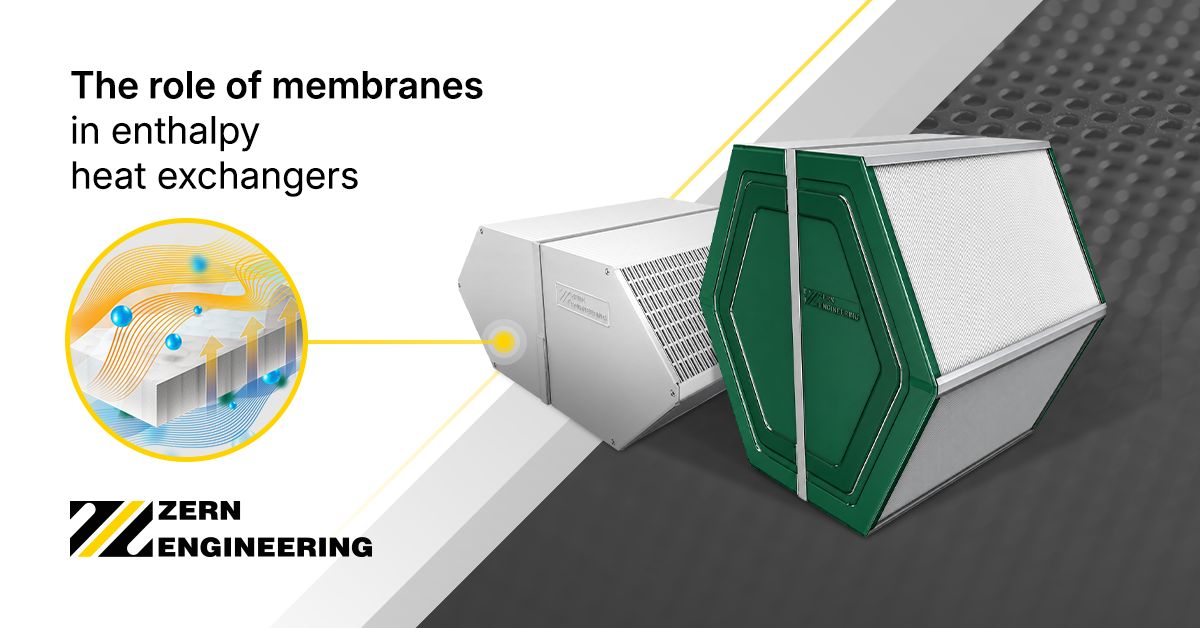
Indoor air quality depends not only on temperature but also on humidity levels. Excessively dry air can cause discomfort, irritation of the respiratory system, and increased sensitivity to allergens, while excessive humidity may promote condensation and mold growth. This is why enthalpy heat exchangers are becoming increasingly popular in modern energy recovery ventilation (ERV) systems.
The key component that distinguishes an enthalpy heat exchanger from a sensible heat exchanger is the membrane. This specialized polymer membrane allows water vapor to pass through while keeping the supply and exhaust air streams separated. As a result, both heat recovery and moisture transfer occur simultaneously, helping maintain a comfortable and healthy indoor environment throughout the year.
Features of polymer membranes
Benefits of membrane-based enthalpy heat exchangers include:
- Recovery of both sensible and latent energy;
- Improved indoor humidity control;
- Reduced risk of excessively dry indoor air during winter;
- Enhanced occupant comfort and well-being;
- Easy maintenance and cleanability
A high-performance polymer membrane is designed to selectively transfer water vapor while maintaining an effective barrier between the supply and exhaust air streams. This enables efficient humidity recovery without transferring contaminants, particles, or odors, helping to maintain excellent indoor air quality. As a result, enthalpy heat exchangers can provide both energy recovery and humidity control, contributing to a healthier and more comfortable indoor environment.
Unlike traditional cellulose-based materials, modern polymer membranes are resistant to moisture-related degradation and do not support the growth of mold, fungi, or bacteria. This makes them a reliable and hygienic solution for long-term operation in residential buildings, offices, schools, healthcare facilities, and other applications where indoor comfort and air quality are priorities.
In addition, polymer membranes are easy to maintain, can be cleaned and washed, and help ensure stable performance throughout the service life of the heat exchanger.
Key selection criteria for efficient polymer membranes
When evaluating membrane technology, several factors should be considered:
- Moisture transfer efficiency;
- Hygiene and resistance to microbial growth;
- Air-tight separation of supply and exhaust air streams;
- Durability and ease of maintenance.
By combining heat recovery and humidity recovery in a single device, membrane-based enthalpy heat exchangers help improve indoor air quality, reduce HVAC energy consumption, and create healthier indoor spaces. As buildings become more energy efficient and airtight, advanced polymer membrane technology will continue to play a crucial role in the future of sustainable ventilation systems.
Latest news from ZERN ENGINEERING